>
>

EDUCATION - MEMBER COURSES - ELECTIVE
MARINE ELECTRONICS
MARINE ELECTRONICS
The Marine Electronics course consists of three modules: ME 101, Boat Electrical Systems, ME 102, Marine Radio Communications, and ME 103, Marine Electronics for Navigation. There are no prerequisites for any of these modules; however, it is suggested that a member take ME 101 before taking ME 102. All three modules must be successfully completed to receive credit for Marine Electronics.
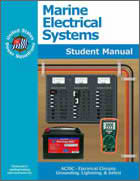
These courses are constantly being updated and when complete the new series will be known as Marine Electrical Systems, (MES), Marine Communications Systems (MCS), and Marine Navigation Systems (MNS).
These courses are constantly being updated and when complete the new series will be known as Marine Electrical Systems, (MES), Marine Communications Systems (MCS), and Marine Navigation Systems (MNS).
ME 101, Boat Electrical Systems, provides information about properties of electricity, electrical power requirements and wiring practices, direct current power, alternating current power, galvanic and stray-current corrosion, lightning protection, and electrical interference.
ME 102, Marine Radio Communications, delves into radio waves and transmitters, receivers and transceivers, antennas and transmission lines, FCC Rules and Regulations, FCC Frequency Plan, marine radiotelephone operating procedures, and other communication services (Emergency Position Indicating Radio Beacon (EPIRB), Digital Selective Calling (DSC), Global Maritime Distress and Safety System (GMDSS), satellite communications, amateur radio, and more).
ME 103, Marine Electronics for Navigation, presents information on depth sounders, RADAR, LORAN-C, GPS Navigation, and two new chapters: Electronic Charting, and Computer-Assisted Navigation (CAN). Members may take this module independent of any other ME module.
ME 102, Marine Radio Communications, delves into radio waves and transmitters, receivers and transceivers, antennas and transmission lines, FCC Rules and Regulations, FCC Frequency Plan, marine radiotelephone operating procedures, and other communication services (Emergency Position Indicating Radio Beacon (EPIRB), Digital Selective Calling (DSC), Global Maritime Distress and Safety System (GMDSS), satellite communications, amateur radio, and more).
ME 103, Marine Electronics for Navigation, presents information on depth sounders, RADAR, LORAN-C, GPS Navigation, and two new chapters: Electronic Charting, and Computer-Assisted Navigation (CAN). Members may take this module independent of any other ME module.